

Toyota Winter Prep: What Should You Check Before the First Freeze in Dayton?
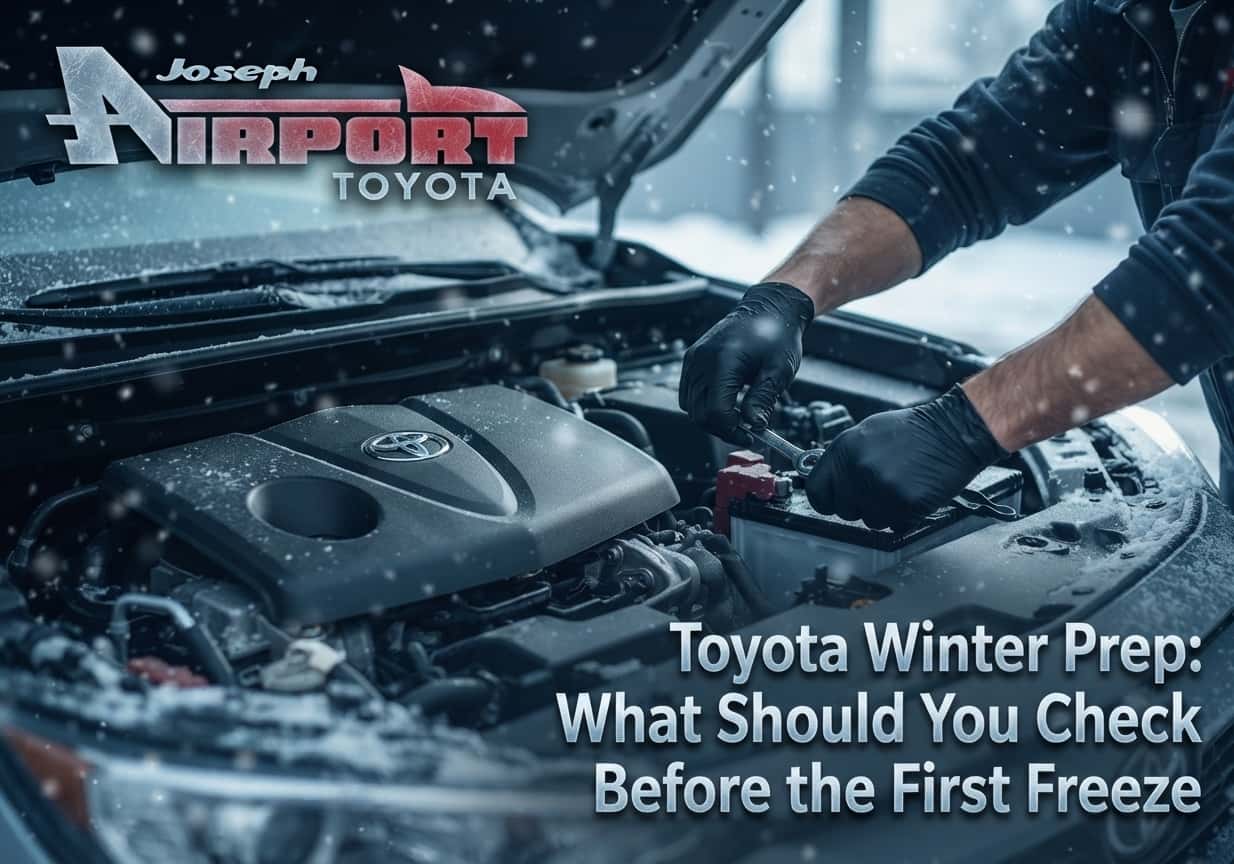
October in the Miami Valley is easy to enjoy: cool mornings, Friday-night football and back roads covered in color. It’s also the last comfortable window to get your vehicle ready for what comes next. Toyota winter prep comes down to a handful of checks: test the battery, confirm tire tread and pressure, refresh wiper blades and washer fluid, make sure every light works, and top off coolant and other fluids. Knocking those out now, before the first hard freeze, is far easier than finding a problem on the coldest morning of the year.
Why October Is the Smart Month for Cold-Weather Maintenance
Most cold-weather breakdowns don’t come out of nowhere. A battery that’s been weakening all summer, tires that were already close to worn out, or wiper blades that have been streaking since August tend to fail the first time temperatures really drop. Taking care of them in October means you’re working on your schedule, not reacting on the side of the road. It also helps to get in ahead of the rush, since service departments everywhere tend to fill up fast after the first cold snap sends a wave of drivers in at once.
Test the Battery While Your Toyota Still Starts Easily
Cold temperatures reduce how much power a battery can deliver, while a cold engine asks for more of it, which is why batteries that seem fine in early fall can quit without warning once the weather turns. A quick battery test measures its health before you’re relying on it. If your Toyota is a hybrid, it still has a 12-volt auxiliary battery that powers up the vehicle’s systems, and that battery deserves the same attention. Slow cranking, dimming lights at startup or a battery that’s several years old are all good reasons to have it checked now.
Tread Depth and Tire Pressure Before Temperatures Drop
Tires lose pressure as the air cools, roughly one psi for every ten-degree drop in temperature, so a tire set correctly in September can be noticeably low by November. Check pressure when the tires are cold and set it to the figure on the placard inside the driver’s door jamb, not the maximum printed on the sidewall. Tread depth matters just as much, because worn tires struggle to grip on wet leaves and push through standing water. The penny test is a quick start — if you can see the top of Lincoln’s head, it’s time to talk about new tires.
Wiper Blades and Washer Fluid for Fog, Leaves and Road Spray
Visibility gets harder this time of year, between early-morning fog, wet leaves sticking to the windshield and spray from trucks on I-70 and I-75. Wiper blades are rubber, and summer heat wears them down, so if yours are streaking, chattering or leaving a haze, replace them now. Swapping in a washer fluid rated for freezing temperatures before the first cold night keeps the reservoir and lines from freezing later.
Lights Matter More Once Daylight Saving Time Ends
Daylight saving time ends on Sunday, November 1, and the evening commute shifts into darkness almost overnight. Walk around your Toyota with the headlights, brake lights, turn signals and fog lights on, and replace any bulb that’s out or dim. Cloudy or yellowed headlight lenses cut down how far you can see, and they can often be restored rather than replaced. If your Toyota has Automatic High Beams as part of Toyota Safety Sense, keep the windshield area in front of the camera clean so the system can do its job.
Coolant, Brakes and the Fluids You Don’t Think About
Coolant does double duty, keeping the engine from overheating in summer and from freezing in the cold, so its level and condition are worth a look before winter. Brake pads and rotors deserve attention too, since wet leaves and cold pavement give you less grip to work with. Following your Toyota’s factory maintenance schedule covers most of this, and if your vehicle is still within its ToyotaCare plan, some of that scheduled service may already be covered. An oil change, a multi-point inspection and a fluid check together give you a clear picture going into the cold months.
Pack a Small Cold-Weather Kit Before You Need It
A few inexpensive items in the cargo area can turn a frustrating morning into a minor delay. An ice scraper with a brush, a warm blanket, a phone charging cable, a flashlight, jumper cables or a portable jump starter, and a pair of gloves cover most situations. Families who drive to early practices and late games might add water and a few snacks. Putting the kit together in October means it’s already in place the first time frost covers the windshield.
Building a Pre-Winter Plan Around the Way You Drive
Not every Toyota needs the same attention. A driver with a long highway commute should put tires and wipers at the top of the list, while someone who mostly takes short trips should pay close attention to the battery, since short drives don’t give it much time to recharge. If your vehicle is close to a scheduled maintenance milestone, combining that visit with a cold-weather inspection saves you a second trip. It’s also worth checking the latest service specials before you book, so you can plan the work around current offers.
Getting ahead of the cold now means fewer surprises later. If you’d rather leave the checklist to the pros, the service team at Joseph Airport Toyota in Vandalia can test your battery, inspect your tires and look over the rest of your Toyota in one visit.
0 comment(s) so far on Toyota Winter Prep: What Should You Check Before the First Freeze in Dayton?